Best Red Light Therapy Masks and Panels (2026)

For fine lines and acne, an FDA-cleared red light therapy mask is the best-supported buy, and the Omnilux Contour Face leads. Panels cover more body, but their sleep claims rest on two small studies.

Updated Oct 20, 202610 products compared

DisclosureSome links earn us a commission. That never moves a product up the list. How we make money

Quick picks

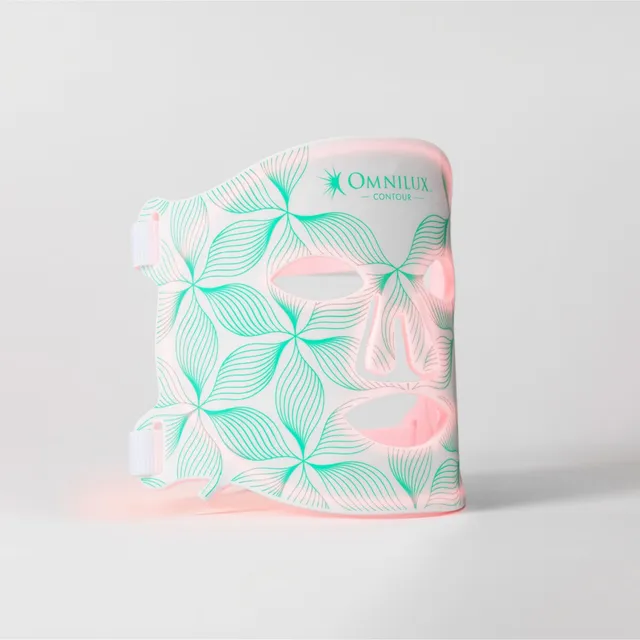
  1. Best maskOmnilux Contour Face
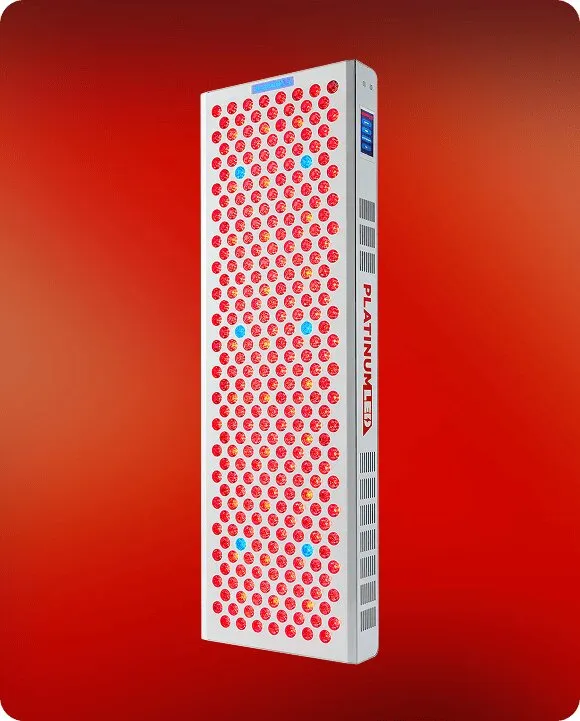
  2. Best panelPlatinumLED BioMax 900
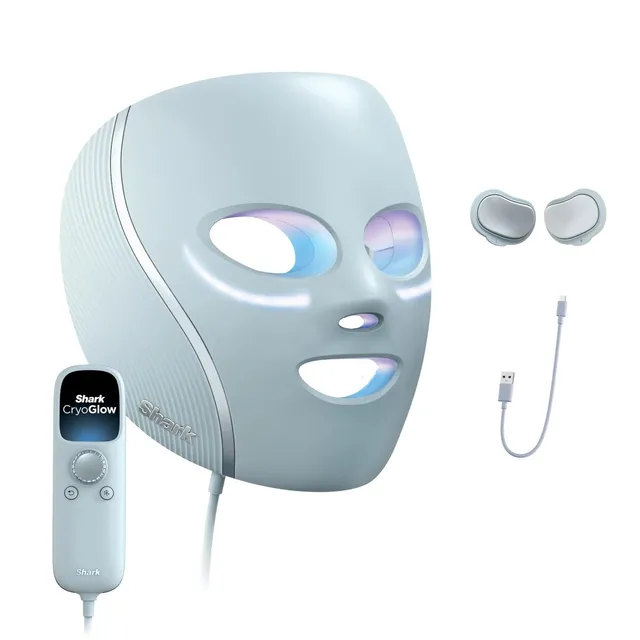
  3. Best mask for acneShark CryoGlow LED Face Mask
  4. Best budget panelHooga HG300

Does it work?

BGood evidence

Skin evidence is fair. In a double-blind, sham-controlled split-face trial (n=76), eight sessions of 633/830 nm LED light reduced measured wrinkles by up to 36%, a sham-controlled home-mask trial (n=60) improved crow's feet at 16 weeks, and blue-plus-red light cut inflammatory acne lesions by 76% in 12 weeks (n=107). Sleep evidence is weak: one study of 20 athletes with no sham light and one 2026 trial of 59 older adults with no inactive control. The B grade covers skin; sleep on its own rates C.

Studies behind this grade

Sunlight first

For your body clock, daylight comes first: red panels do not replace morning light, and their sleep evidence is weak. For skin, sunlight is not a substitute, because UV drives skin aging. In a 4.5-year trial of 903 adults, daily sunscreen users showed no detectable increase in skin aging. Use the mask indoors and sunscreen outdoors. Why morning sunlight matters.

Sources

Side by side

ProductTypeWavelengthsIrradiance (source)Treatment areaSessionFDA statusPrice
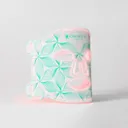
Omnilux Contour FaceMask (flexible silicone)633 nm red, 830 nm NIR~30 mW/cm² on skin (brand claim)Full face10 min, 3-5x a weekCleared for wrinkles (listed under K191629)$395
PlatinumLED BioMax 900Panel (half body)630, 660 nm red; 810, 830, 850, 1060 nm NIR; 480 nm blue90 mW/cm² at 6 in (independent)Panel 35.8 × 11.8 in10-20 min per area at 8-14 inClass II listed, 510(k)-exempt, not cleared$1,299
Shark CryoGlow LED Face MaskMask (rigid shell)630 nm red, 830 nm NIR, 415 nm blue128 mW/cm² per mode (maker's FDA filing)Full face6 min aging, 8 min acne, 4 min upkeepCleared for wrinkles and acne (K242796)$350
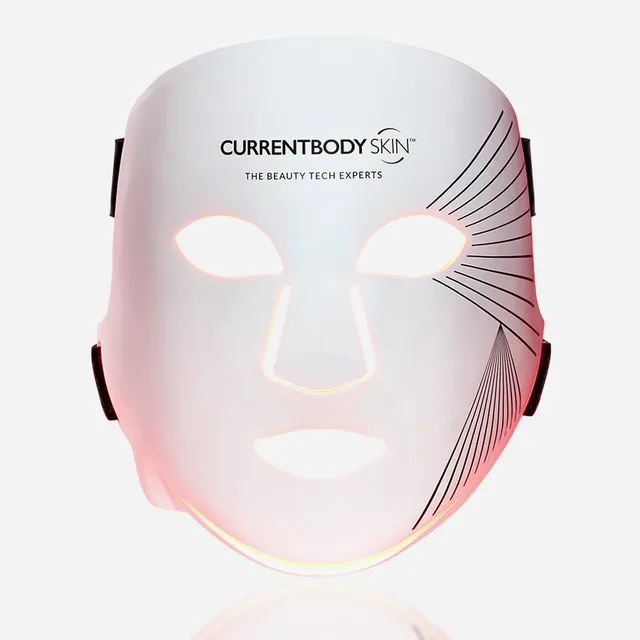
CurrentBody Skin LED Light Therapy Mask Series 2Mask (flexible silicone)633 nm red, 830 nm NIR (retail page adds 1072 nm)30 mW/cm² (maker's FDA filing)Full face and jawline10 min, 3-5x a weekCleared for wrinkles (K250966)$470
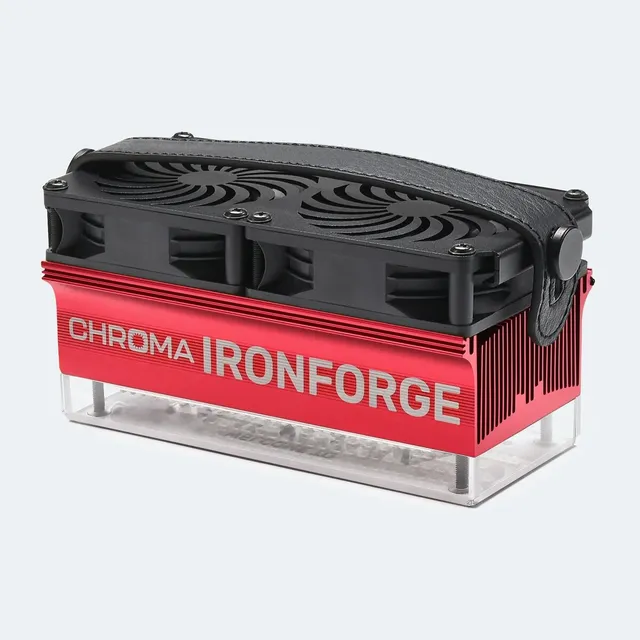
Chroma IronforgeHandheld630, 670 nm red; 760, 810, 850 nm NIR148 mW/cm² at 6 in (independent, earlier model)Handheld, body 6.3 × 3.2 × 2.7 in30-90 sec per area at 0-6 in (brand)Not cleared; sold as general wellness$1,250
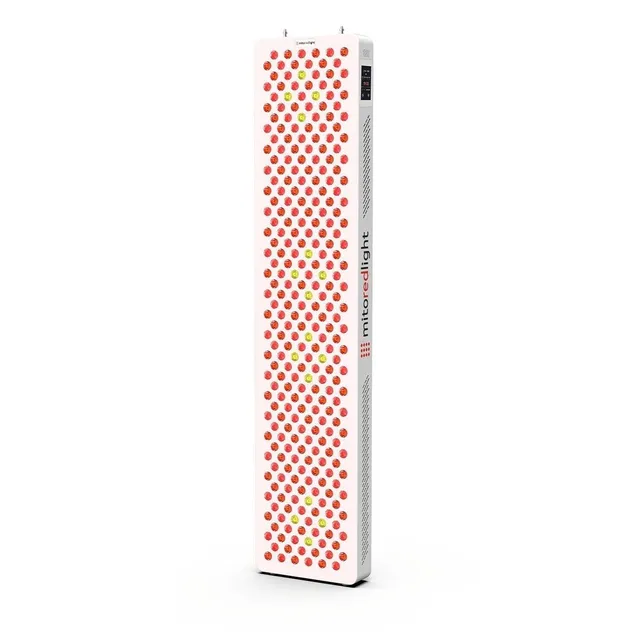
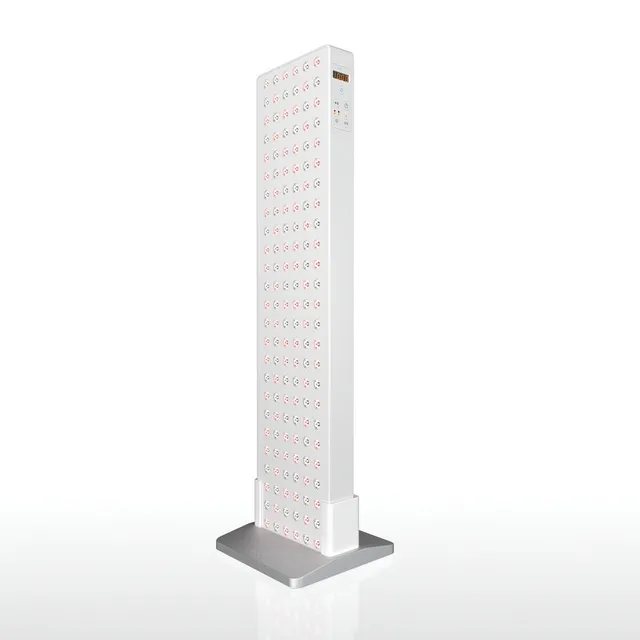
Mito Red Light MitoPRO 1500XPanel (full body)590 nm amber; 630, 660 nm red; 810, 830, 850 nm NIR68 mW/cm² at 6 in (independent)Panel 10 × 43 in10 min per area at 12-18 inClass II listed, 510(k)-exempt, not cleared$1,299
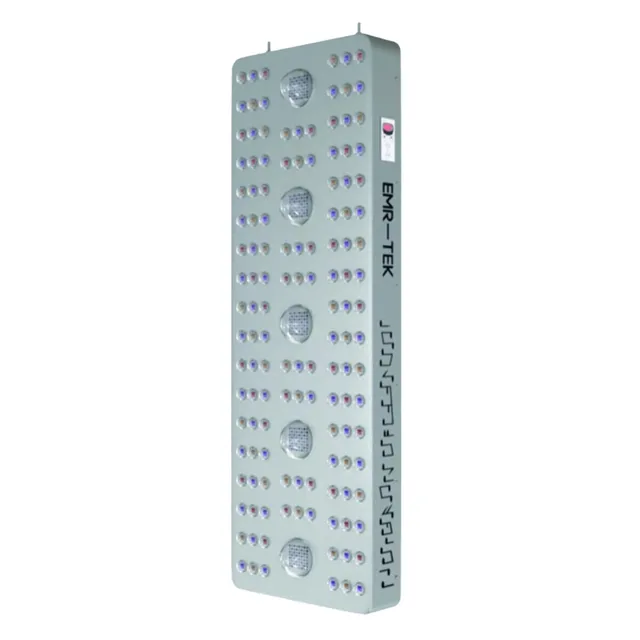
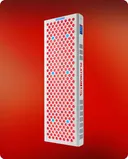
EMR-TEK Inferno ProPanel (tall, self-standing)630, 660 nm red, 830 nm NIR (brand)138 mW/cm² at 6 in, 67 at 12 in, centre point (LightLab report on Inferno)Head to lower core standing (brand)5-10 min at 16-24 in, up to 5x a weekNone; sold as a general wellness device$1,900
Hooga HG300Panel (tabletop)660 nm red, 850 nm NIR73 mW/cm² at 6 in (brand claim)16.5 × 13 in at 6 in (brand)Timer 5/10/15 min; ~5 min at 18 in for skinNone stated$199
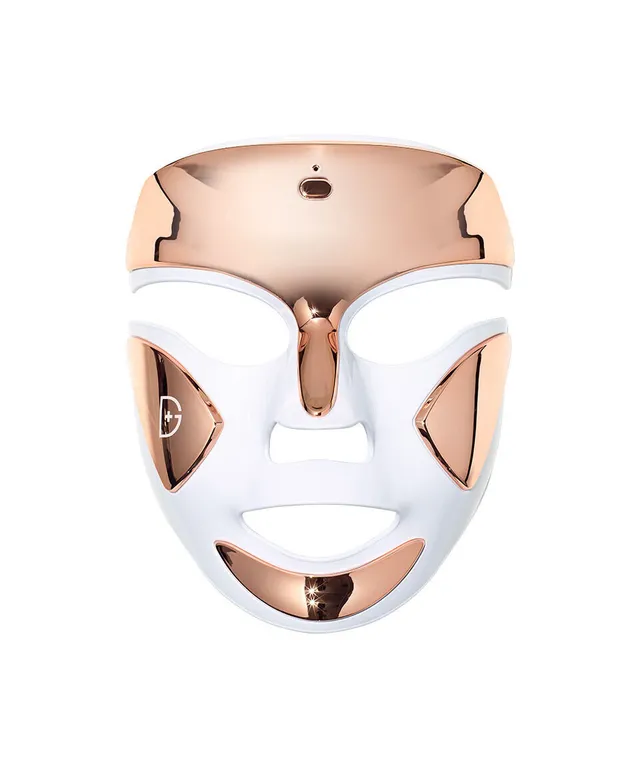
Dr. Dennis Gross DRx SpectraLite FaceWare ProMask (flexible)605, 630, 880 nm; 415 nm blue (brand table)Not publishedFull face3 min, once a dayBrand says cleared; no K number given$455
Joovv Solo 3.0Panel (half body)660 nm red, 850 nm NIR59 mW/cm² at 6 in (independent)Panel ~9 × 30 in10 min at 16-24 inClass II listed, 510(k)-exempt, not cleared$1,699

Prices are approximate list prices in USD at the time we checked and change often.

Chroma Ironforge

Chroma Ironforge

by Chroma · $1,250

Brick-sized handheld with five red and NIR wavelengths. An earlier version measured 148 mW/cm² at 6 inches, but it treats one small area at a time.

Irradiance (source)148 mW/cm² at 6 in (independent, earlier model)

Best for: Targeting a knee, shoulder or other single area in short sessions, or packing a strong red light device for travel.

EMR-TEK Inferno Pro

EMR-TEK Inferno Pro

by EMR-TEK · $1,900

Tall red and near-infrared panel with five COB modules. A LightLab report on the Inferno measured 138 mW/cm² at 6 inches. Not FDA cleared.

Irradiance (source)138 mW/cm² at 6 in, 67 at 12 in, centre point (LightLab report on Inferno)

Best for: Torso or seated full-body sessions for buyers who want a lab irradiance report and accept a high price.

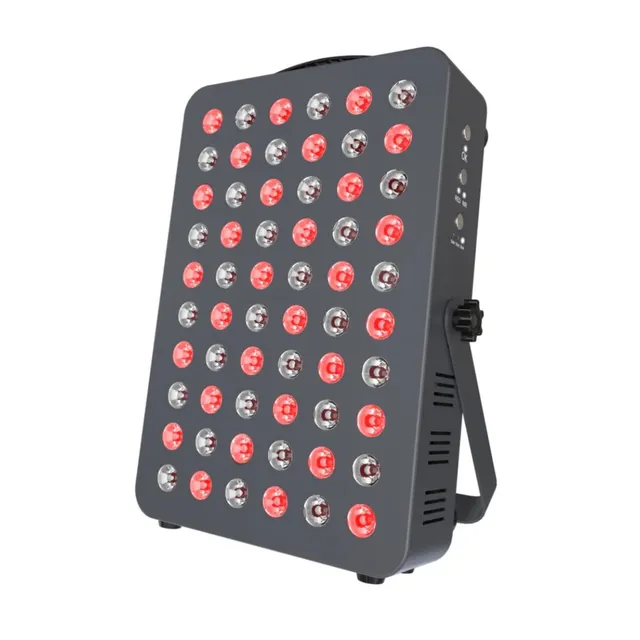
Hooga HG300

Best budget panel

Hooga HG300

by Hooga · $199

$199 tabletop panel with 660 nm red and 850 nm near-infrared LEDs, separate red and NIR switches, a 3-year warranty, and stock on Amazon.

Irradiance (source)73 mW/cm² at 6 in (brand claim)

Best for: Trying red light on the face or one joint before spending $1,000 or more on a big panel.

Joovv Solo 3.0

Joovv Solo 3.0

by Joovv · $1,699

Lightweight 660/850 nm half-body panel with app control and modular mounts, but the lowest measured output per dollar of the panels here.

Irradiance (source)59 mW/cm² at 6 in (independent)

Best for: Buyers who value a light, app-connected panel and modular setup over raw output per dollar.

What to look for

A K number, not "FDA registered"
For a mask, look up the 510(k) number in the FDA database. Product code OHS covers wrinkles and OLP covers acne. "Class II registered" on a panel means it is listed, not cleared.
Wavelengths that match the trials
Red at 630 to 660 nm plus near-infrared at 810 to 850 nm. Add 415 nm blue only if you want to treat acne.
Irradiance with a method and a distance
Trust spectrometer readings at a stated distance. Independent tests put the Mito, PlatinumLED and Joovv panels at 59 to 90 mW/cm² at 6 inches. A claim over 100 mW/cm² with no method may be a solar-meter number.
A session you will repeat
Skin trials ran 2 to 5 sessions a week for 4 to 16 weeks. A mask with a 3 to 10 minute timer is easier to keep up than standing in front of a panel.
Warranty and trial period
Look for at least 2 years of warranty. On panels over $500, a 60-day trial lets you return a unit that is too loud or too big.
Blue channel you can turn off
If you will use it after dark, pick red-only modes. Melatonin suppression peaks at 446 to 477 nm, so skip 415 or 480 nm blue LEDs late in the evening.

Red light therapy mask or panel: which to buy

For skin, buy an FDA-cleared red light therapy mask. It sits on the face, delivers a fixed dose in 3 to 10 minutes, and uses the 630 to 660 nm red and 830 to 850 nm near-infrared light tested in most skin trials. Buy a panel only if you want to treat larger areas like the back or legs.

Three of the four masks below have a 510(k) number you can check. None of the panels does. A panel also leaves distance and time up to you, and a 30-inch panel is a poor way to treat a face.

What the research says for skin

The best skin trial is small but well designed. In a double-blind, sham-controlled split-face study of 76 people, eight LED sessions at 633 nm, 830 nm or both reduced measured wrinkles by up to 36% and raised elasticity by up to 19% from baseline.1 A randomized trial of 136 volunteers found better collagen density and skin roughness after 30 sessions of red or red-plus-near-infrared light, compared with untreated controls.2

Most early trials used clinic or full-body devices. Home masks now have direct evidence too. A 2025 multi-center, double-blind trial gave 60 adults a 630/850 nm mask or a sham device, and independent raters scored crow’s feet better in the real-mask group at 8, 12 and 16 weeks.3

For acne, blue (415 nm) plus red light cut inflammatory lesions by 76% after 12 weeks in a 107-patient randomized trial.4 A systematic review of home devices gave LED for acne a grade B recommendation.5 Expect subtle change over 2 to 4 months. The does red light therapy work guide covers the wider evidence.

What the research says for sleep

The study most often quoted gave 10 female basketball players 30 minutes of whole-body 658 nm light every night for 14 days. Their sleep-quality scores and melatonin improved compared with 10 teammates who lay under the device with no light on.6 There was no sham light.

A 2026 trial in 59 older adults with insomnia found better self-rated sleep after 60 minutes of 850 nm light to the neck each night. Actigraphy and melatonin did not change, and every group got an active light, so there was no inactive control.7 That is not enough to buy a panel for sleep. See red light therapy for sleep for the details.

FDA cleared vs FDA registered

“FDA cleared” means the device passed a 510(k) review and has a K number in the FDA database. Wrinkle devices fall under product code OHS and acne devices under OLP. The Omnilux Contour is listed under K191629, the CurrentBody Series 2 is K250966 and the Shark CryoGlow is K242796. Dr. Dennis Gross says its mask is cleared but does not publish a number.

“Class II registered”, the wording on most panels, means the company listed the device with the FDA. Panels sold as infrared therapeutic heating lamps (product code ILY) are exempt from 510(k) review.8 Clearance is not proof of results either. The American Academy of Dermatology describes it as a finding that a device poses low risk.9 The FDA-cleared devices guide goes further.

Why red light therapy panel numbers disagree

Brands quote irradiance in mW/cm² and measure it however they like. Mito’s own page lists over 160 mW/cm² at 6 inches on a solar meter and over 73 on a lab spectroradiometer for the same panel.10 Spectrometer averages at 6 inches by reviewer Alex Fergus put the PlatinumLED BioMax 900 at 90, the MitoPRO 1500X at 68 and the Joovv Solo 3.0 at 59 mW/cm².11

Masks run lower, around 30 mW/cm² on the skin, which is why most sessions last 10 minutes. The Shark CryoGlow’s FDA filing lists 128 mW/cm² in its anti-aging mode, which lets it finish in about 6.

How to use a mask or panel

  • Use the built-in timer. Skin trials ran 2 to 5 sessions a week for 4 to 16 weeks.
  • Panel brands suggest 6 to 24 inches and about 10 minutes per area. Closer means a higher dose.
  • Wear goggles if the instructions say so. Joovv, for example, says to wear them whenever near-infrared is on.
  • Take photos in the same light every 4 weeks and judge after 8 to 12 weeks.

Using red light in the evening

Red light is a sensible choice after dark. Melatonin suppression is most sensitive to light at 446 to 477 nm and much weaker toward red.12 Two caveats apply. Some devices add blue LEDs, such as the BioMax’s 480 nm channel, which can be switched off, and the 415 nm acne modes on masks. And a bright panel at close range is still bright.

The light exposure planner helps time light across the day, and amber and red bulbs handle evening room lighting.

Who should skip red light therapy

Talk to a dermatologist first if you take medication that makes skin more sensitive to light or have a light-sensitive condition such as lupus. The AAD says red light may not be recommended in those cases, and that people with darker skin can be more prone to lasting dark spots from visible light.9 If you have an eye condition, ask an eye doctor before using a bright device close to your face. The red light therapy risks guide covers side effects.
Footnotes

  1. Lee SY, Park KH, Choi JW, et al. A prospective, randomized, placebo-controlled, double-blinded, and split-face clinical study on LED phototherapy for skin rejuvenation. J Photochem Photobiol B. 2007;88(1):51-67. doi:10.1016/j.jphotobiol.2007.04.008 ↩

  2. Wunsch A, Matuschka K. A controlled trial to determine the efficacy of red and near-infrared light treatment in patient satisfaction, reduction of fine lines, wrinkles, skin roughness, and intradermal collagen density increase. Photomed Laser Surg. 2014;32(2):93-100. doi:10.1089/pho.2013.3616 ↩

  3. Park SH, Park SO, Jung JA. Clinical study to evaluate the efficacy and safety of home-used LED and IRED mask for crow’s feet: a multi-center, randomized, double-blind, sham-controlled study. Medicine (Baltimore). 2025;104(7):e41596. doi:10.1097/MD.0000000000041596 ↩

  4. Papageorgiou P, Katsambas A, Chu A. Phototherapy with blue (415 nm) and red (660 nm) light in the treatment of acne vulgaris. Br J Dermatol. 2000;142(5):973-978. doi:10.1046/j.1365-2133.2000.03481.x ↩

  5. Cohen M, Austin E, Masub N, et al. Home-based devices in dermatology: a systematic review of safety and efficacy. Arch Dermatol Res. 2022;314(3):239-246. doi:10.1007/s00403-021-02231-0 ↩

  6. Zhao J, Tian Y, Nie J, et al. Red light and the sleep quality and endurance performance of Chinese female basketball players. J Athl Train. 2012;47(6):673-678. doi:10.4085/1062-6050-47.6.08 ↩

  7. Chen PY, Chen ST, Chen YL, et al. Effects of bright light and near-infrared light on insomnia symptoms in community-dwelling older adults: a randomized clinical trial. Photodiagnosis Photodyn Ther. 2026;58:105425. doi:10.1016/j.pdpdt.2026.105425 ↩

  8. US Food and Drug Administration. Product classification: lamp, infrared, therapeutic heating (ILY), 21 CFR 890.5500, 510(k) exempt. accessdata.fda.gov ↩

  9. American Academy of Dermatology. Is red light therapy right for your skin? aad.org ↩ ↩2

  10. Mito Red Light. MitoPRO X Series specifications. mitoredlight.com ↩

  11. Fergus A. Best red light therapy panel: epic comparison. Light Therapy Insiders. Updated July 2026. lighttherapyinsiders.com ↩

  12. Brainard GC, Hanifin JP, Greeson JM, et al. Action spectrum for melatonin regulation in humans: evidence for a novel circadian photoreceptor. J Neurosci. 2001;21(16):6405-6412. doi:10.1523/JNEUROSCI.21-16-06405.2001 ↩

Questions people ask

Do red light therapy masks actually work?

For fine lines, small controlled trials show modest gains over 4 to 16 weeks, including a sham-controlled trial of a home mask in 60 adults. For acne, blue-plus-red light has the strongest data. Results are subtle and stop building when you stop using it.

What is the best FDA cleared red light therapy mask?

The Omnilux Contour Face (listed under K191629), the CurrentBody Series 2 (K250966) and the Shark CryoGlow (K242796) all have clearances you can look up. The CryoGlow is the only one of the three cleared for acne as well as wrinkles.

Is a red light panel or a mask better?

A mask is better for the face, because the dose is fixed and three of the four here have a K number you can check. A panel is better for the back, legs or whole body, but none of the panels here is FDA cleared.

Can red light therapy help you sleep?

The evidence is weak. A 2012 study of 20 athletes and a 2026 trial of 59 older adults reported better self-rated sleep, but neither had a proper sham, and the 2026 trial found no change in melatonin or actigraphy.

How often should you use a red light therapy mask?

Follow the device. Omnilux suggests 3 to 5 sessions a week for 4 to 6 weeks, and CurrentBody's FDA filing lists 5 sessions a week for 6 weeks. Judge results after 8 to 12 weeks.

Do you need goggles for red light therapy?

Follow the instructions for your device. Joovv says to wear eyewear whenever near-infrared is on, while Omnilux says its mask meets the IEC 62471 eye-safety standard and needs no goggles.