Best sunrise alarm clocks (2026): specs and evidence

Get outdoor light first: full daylight is about 25,000 lux, roughly 100 times the dawns tested in trials. A sunrise alarm clock earns its place when you wake before the sun or in a dark winter room. For that job, the Philips SmartSleep HF3650 is our pick: rated to 310 lux, sunrise and sunset without an app, no subscription.

Updated Oct 21, 20268 products compared

DisclosureSome links earn us a commission. That never moves a product up the list. How we make money

Quick picks

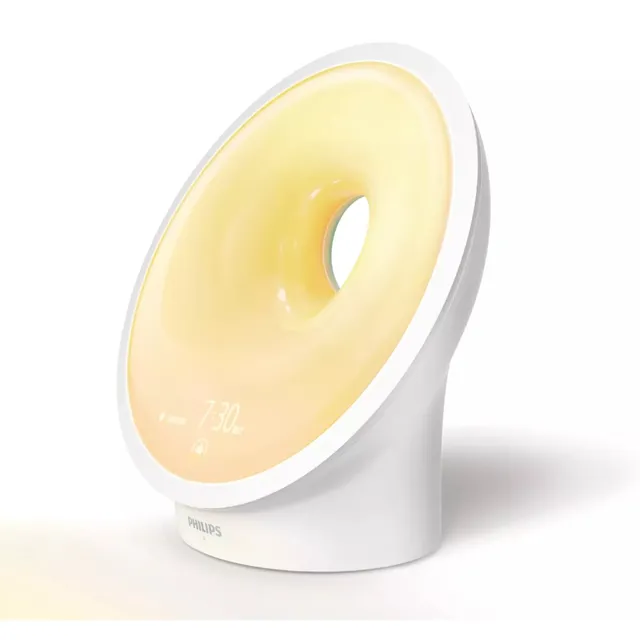
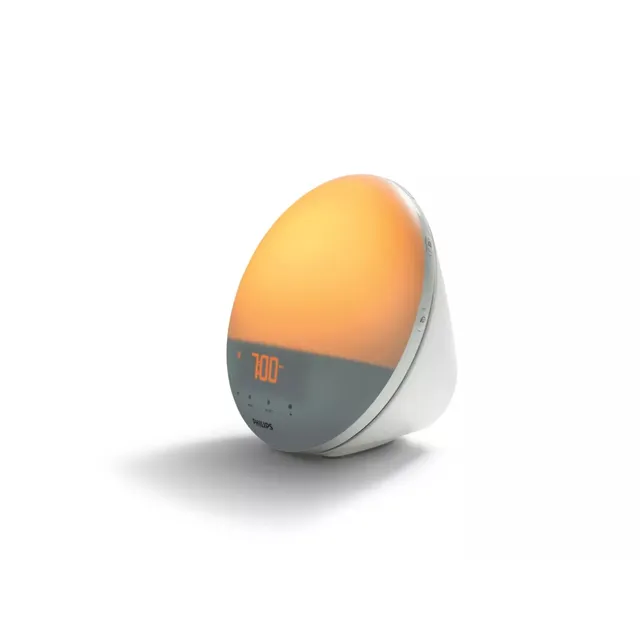
  1. Best overallPhilips SmartSleep Sleep and Wake-Up Light (HF3650)
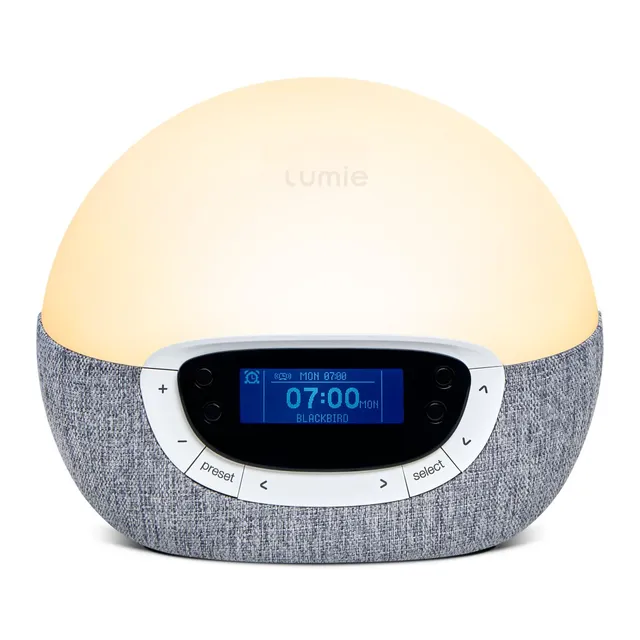
  2. Best for long sunrisesLumie Bodyclock Shine 300
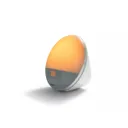
  3. Best valuePhilips SmartSleep Wake-up Light (HF3520)
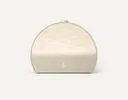
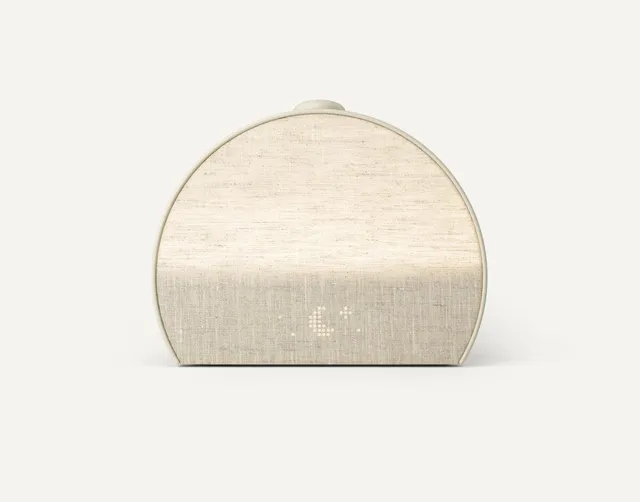
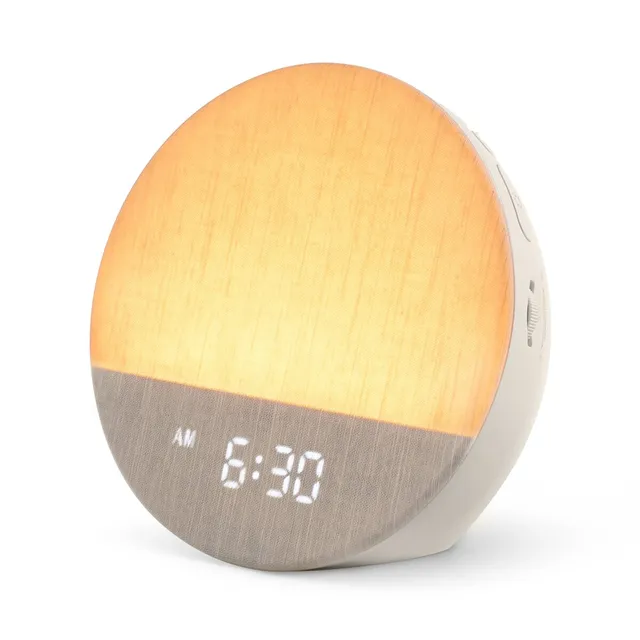
  4. Best for sleep soundsHatch Restore 3
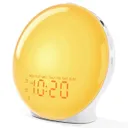
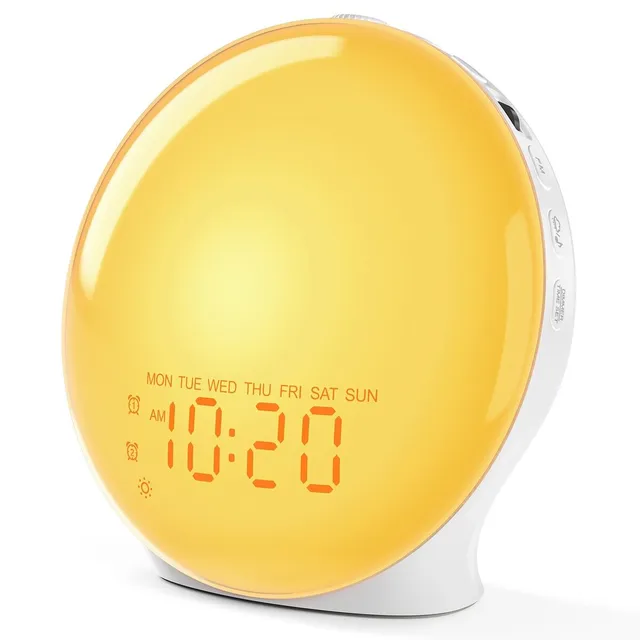
  5. Best budgetJALL Wake-Up Light Sunrise Alarm Clock

Does it work?

BGood evidence

In small randomized trials of 8 to 16 people, a 30-minute artificial dawn before the alarm lowered self-rated sleepiness after waking, but effects on test performance and cortisol were mixed, and a trial in 23 older adults found no alertness benefit. For winter depression, a 2005 meta-analysis of 5 RCTs found an effect size of 0.73, and a 95-patient trial found higher remission than a dim placebo. Dawn simulation did worse than a light box in a 61-patient trial, and most protocols peaked near 250 lux.

Studies behind this grade

Sunlight first

Outdoor daylight is about 25,000 lux, roughly 100 times the dawns tested in trials, and one weekend of camping on natural light moved melatonin timing 1.4 hours earlier. Use a sunrise clock for dark winter wake-ups, then get outside once you are up. Why morning sunlight matters.

Sources

Side by side

ProductPeak brightnessSunrise lengthSunset modeSoundsApp requiredSubscriptionPrice
Philips SmartSleep Sleep and Wake-Up Light (HF3650)310 lux (no distance given)30 min default, adjustableYes, length adjustable7 wake, 3 relaxation + FM radioNoNone$180
Lumie Bodyclock Shine 300Not published (~350 lm)15-90 minYes, 15-90 min15 + FM radioNoNone$169
Philips SmartSleep Wake-up Light (HF3520)300 lux (no distance given)20-40 minYes5 + FM radioNoNone$107
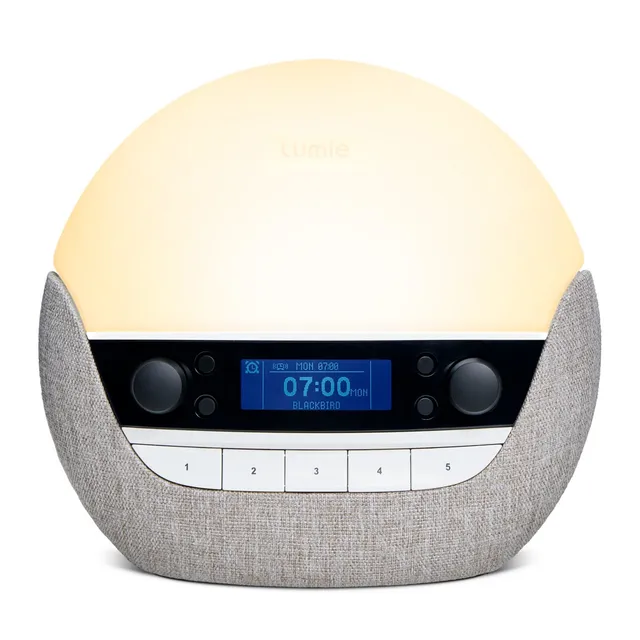
Lumie Bodyclock Luxe 700FMNot published (~350 lm)15-90 minYes, 15-90 min27 + FM radioNoNone$259
Hatch Restore 3Not published5-60 minYes, 30-60 min60+, more with Hatch+Yes, for setup and routinesOptional, $5.99/mo or $59.99/yr$170
JALL Wake-Up Light Sunrise Alarm ClockNot published10-60 minSleep timer, 10-480 min25 + FM radioNoNone$36
Dreamegg Sunrise 1Not published15, 30, 45 or 60 minSleep timer, 5-180 min29NoNone$65
Loftie LampNot published9 min, fixed, starts at alarm timeYes, 9 minNone (pairs with Loftie Clock)Yes, for alarmsNone listed$280

Prices are approximate list prices in USD at the time we checked and change often.

What to look for

Published peak brightness
Most trials used dawns that peaked near 250 lux. Only Philips publishes a figure (300 to 310 lux, no distance given). Treat unrated clocks as unknown, and place any clock within arm's reach of your pillow, because lux drops fast with distance.
Sunrise length you can set
Look for an adjustable ramp that includes 30 minutes, the length used in the sleep inertia trials. A 95-patient SAD trial used 90 minutes, which only the Lumie models here list. Avoid fixed ramps under 15 minutes.
A dim, warm sunset
A fade-to-dark timer of 15 to 60 minutes that starts warm and low. Expert guidance caps evening light at 10 lux melanopic for the 3 hours before bed, roughly 30 lux from a warm white lamp.
A display that goes dark
The clock face should dim automatically or switch off. The same guidance puts the sleep environment under 1 lux melanopic at the eye, which a bright blue LED readout can exceed.
Works without a phone
Buttons for alarms and brightness, no Wi-Fi needed after setup, and a power backup if you get outages. Clocks that need an app to set alarms stop being useful when the app or your Wi-Fi breaks.
Two-year cost, not sticker price
Add any subscription. Hatch+ is $59.99 a year, so a $169.99 Restore 3 with Hatch+ costs about $290 over two years. Philips, Lumie, JALL and Dreamegg have no subscription.

Sunlight first, sunrise alarm clock second

Outdoor light is the stronger signal. Full daylight is about 25,000 lux and direct sun up to 100,000 lux,1 while the dawns tested in trials peaked near 250 lux. In a Colorado camping study, people got about 3,100 lux in the first 2 hours after waking, against about 930 lux on their normal routine, and their sleep and wake times moved about 1.2 hours earlier.2

So the order is simple. If the sun is up when you wake, open the curtains and get outside. Our guide to morning sunlight covers how long and when. A sunrise clock helps when you wake before sunrise, in a dark winter bedroom, or behind blackout curtains. It makes the wake-up gentler. It does not replace the time outside.

How a sunrise alarm clock works

A sunrise alarm clock, also sold as a wake-up light or dawn simulator, brightens a lamp over the last 5 to 90 minutes before your alarm, usually shifting from red through orange to white. The aim is to reach your eyelids while you are in light sleep, so the sound becomes a backup rather than the thing that jolts you awake. Most also run a sunset: a slow fade to dark at bedtime.

It is not a SAD lamp. Light therapy for seasonal depression typically means 2,500 to 10,000 lux for 30 to 60 minutes shortly after waking, while dawn simulation uses much weaker light, around 250 lux, at the end of sleep.3 If you want the bigger dose, start with our light therapy lamps and the guide on how to use a SAD lamp.

What the research says about dawn simulation

The best evidence is for feeling less groggy, and it comes from small trials.

  • In 16 healthy people who struggled to wake, a 30-minute artificial dawn lowered self-rated sleepiness after the alarm. It did not change test performance, core temperature or cortisol.4
  • In 8 hard-to-wake adults, a 30-minute dawn raised alertness ratings and cut reaction time from 0.86 to 0.81 seconds.5
  • At home, two weeks each of 50 lux and 250 lux dawns reduced sleep inertia complaints, with no shift in melatonin timing.6
  • In a community trial where 77 people used dawn simulators in two-week blocks over a winter, self-rated sleep quality improved modestly after about six days and slipped back when they stopped.7
  • In 23 adults with a mean age of 67, a dawn light cut sleep before the alarm by 33% but did not improve alertness or balance.8

For winter depression, a 2005 meta-analysis of five randomized trials found an effect size of 0.73 for dawn simulation.9 In a 95-patient trial, a 90-minute dawn peaking at 250 lux beat a dim red placebo and, unusually, also beat 10,000 lux bright light.10 Other head-to-head trials disagree. In 99 patients, dawn simulation improved symptoms by 49.5% against 57.1% for bright light and was not superior,11 and in 61 patients it did worse than a light box (40% vs 57% improvement).12

That is why the category gets a B: real but modest effects, short trials, and protocols that peaked near 250 lux. The full breakdown is in do sunrise alarm clocks work.

How bright and how long the sunrise should be

Two specs decide whether a clock can copy those protocols: brightness at your pillow and ramp length.

Philips is the only brand here that publishes a peak, 300 lux for the HF3520 and 310 lux for the HF3650, and neither figure comes with a distance. Lumie says it does not rate its Bodyclock lights in lux and quotes about 350 lumens for the range. Hatch, JALL, Dreamegg and Loftie publish nothing. Lux falls quickly with distance, so a clock across the room delivers far less than its rating. The lux levels tool explains how to check what reaches you.

For ramp length, 30 minutes is the standard in the sleep inertia trials, and the 95-patient SAD trial used 90 minutes. Lumie’s 15 to 90 minute range covers both. The other clocks here list maximums of 40 to 60 minutes or don’t publish one. The Loftie Lamp’s fixed 9-minute ramp starts at alarm time, which is shorter than anything tested.

How to set up a sunrise alarm clock

  1. Put it on the nightstand at pillow height, angled toward your face, with nothing in between.
  2. Start with a 30-minute sunrise at high brightness. Philips advises lowering the brightness or shortening the sunrise if you wake too early or with a headache.13
  3. Keep the rest of the room dark. Expert guidance puts the sleep environment under 1 lux melanopic at the eye,14 so in summer pair the clock with blackout curtains.
  4. Run the sunset dim and warm. The same guidance caps evening light at 10 lux melanopic for the 3 hours before bed, which ordinary warm white LEDs meet at about 30 lux.14
  5. Keep your wake time steady, use the sleep calculator to set a bedtime, and get outside after you get up (why morning sunlight matters).

Who should skip a sunrise alarm clock

  • People who wake after sunrise. If daylight is already up, opening the curtains and stepping outside gives far more light than any clock here.1
  • People who need treatment for depression. A sunrise clock is not a substitute for care. Philips tells anyone who has had serious depression to consult a doctor before using its wake-up lights.13
  • People with bipolar disorder. In a review of 799 patients treated with light, 0.9% switched into mania and 1.4% into hypomania, but the rate was 18.8% among the 16 with rapid cycling.15 Ask your psychiatrist before using light for mood.
  • Anyone short on sleep. A brighter morning does not reduce how much sleep you need, and in the older-adult trial the dawn mostly cut sleep short.8
  • Light sleepers with a later-rising partner. Philips warns that someone sharing the room can wake from the light even when farther from the clock.13

If you have an eye condition or take a medication that makes your eyes sensitive to light, clinicians suggest an eye doctor’s clearance before starting light therapy.3 The light from these clocks is far weaker, but the same check is sensible.
Footnotes

  1. Blume C, Garbazza C, Spitschan M. Effects of light on human circadian rhythms, sleep and mood. Somnologie. 2019;23(3):147-156. doi:10.1007/s11818-019-00215-x ↩ ↩2

  2. Wright KP Jr, McHill AW, Birks BR, et al. Entrainment of the human circadian clock to the natural light-dark cycle. Curr Biol. 2013;23(16):1554-1558. doi:10.1016/j.cub.2013.06.039 ↩

  3. Galima SV, Vogel SR, Kowalski AW. Seasonal affective disorder: common questions and answers. Am Fam Physician. 2020;102(11):668-672. aafp.org ↩ ↩2

  4. Van De Werken M, Giménez MC, De Vries B, et al. Effects of artificial dawn on sleep inertia, skin temperature, and the awakening cortisol response. J Sleep Res. 2010;19(3):425-435. doi:10.1111/j.1365-2869.2010.00828.x ↩

  5. Thompson A, Jones H, Gregson W, Atkinson G. Effects of dawn simulation on markers of sleep inertia and post-waking performance in humans. Eur J Appl Physiol. 2014;114(5):1049-1056. doi:10.1007/s00421-014-2831-z ↩

  6. Giménez MC, Hessels M, van de Werken M, et al. Effects of artificial dawn on subjective ratings of sleep inertia and dim light melatonin onset. Chronobiol Int. 2010;27(6):1219-1241. doi:10.3109/07420528.2010.496912 ↩

  7. Leppämäki S, Meesters Y, Haukka J, Lönnqvist J, Partonen T. Effect of simulated dawn on quality of sleep: a community-based trial. BMC Psychiatry. 2003;3:14. doi:10.1186/1471-244X-3-14 ↩

  8. Gabel V, Miglis M, Zeitzer JM. Effect of artificial dawn light on cardiovascular function, alertness, and balance in middle-aged and older adults. Sleep. 2020;43(10):zsaa082. doi:10.1093/sleep/zsaa082 ↩ ↩2

  9. Golden RN, Gaynes BN, Ekstrom RD, et al. The efficacy of light therapy in the treatment of mood disorders: a review and meta-analysis of the evidence. Am J Psychiatry. 2005;162(4):656-662. doi:10.1176/appi.ajp.162.4.656 ↩

  10. Avery DH, Eder DN, Bolte MA, et al. Dawn simulation and bright light in the treatment of SAD: a controlled study. Biol Psychiatry. 2001;50(3):205-216. doi:10.1016/s0006-3223(01)01200-8 ↩

  11. Terman M, Terman JS. Controlled trial of naturalistic dawn simulation and negative air ionization for seasonal affective disorder. Am J Psychiatry. 2006;163(12):2126-2133. doi:10.1176/ajp.2006.163.12.2126 ↩

  12. Lingjaerde O, Føreland AR, Dankertsen J. Dawn simulation vs. lightbox treatment in winter depression: a comparative study. Acta Psychiatr Scand. 1998;98(1):73-80. doi:10.1111/j.1600-0447.1998.tb10045.x ↩

  13. Philips. Wake-up Light HF3485 user manual (safety and general sections). documents.philips.com ↩ ↩2 ↩3

  14. Brown TM, Brainard GC, Cajochen C, et al. Recommendations for daytime, evening, and nighttime indoor light exposure to best support physiology, sleep, and wakefulness in healthy adults. PLoS Biol. 2022;20(3):e3001571. doi:10.1371/journal.pbio.3001571 ↩ ↩2

  15. Benedetti F. Rate of switch from bipolar depression into mania after morning light therapy: a historical review. Psychiatry Res. 2018;261:351-356. doi:10.1016/j.psychres.2018.01.013 ↩

Questions people ask

Is a sunrise alarm clock better than natural sunlight?

No. Full daylight is about 25,000 lux, while the dawns tested in trials peaked near 250 lux. A sunrise clock makes waking in a dark room easier; once you are up, outdoor light is what sets your body clock.

Do sunrise alarm clocks actually work?

For grogginess, small trials say yes: a 30-minute artificial dawn lowered self-rated sleepiness after waking in lab studies of 8 to 16 people. Effects on test performance and cortisol were mixed, and a sunrise clock does not make up for short sleep.

Is a sunrise alarm clock the same as a SAD lamp?

No. A SAD lamp gives 2,500 to 10,000 lux for 30 to 60 minutes shortly after waking, while dawn simulation uses much weaker light, around 250 lux, at the end of sleep. Dawn simulation has trial evidence for winter depression, but a light box has more.

How long should a sunrise alarm be?

Start with 30 minutes, the length used in most sleep inertia trials. If you wake before the alarm or with a headache, Philips advises lowering the brightness or shortening the sunrise.

Do I need an app or subscription for a sunrise alarm clock?

No. The Philips, Lumie, JALL and Dreamegg clocks here work with buttons and have no subscription. Hatch needs its app for setup and sells Hatch+ for $5.99 a month or $59.99 a year, though the sunrise alarm works without it.

Is the Loftie Clock a sunrise alarm?

No. Loftie says the Loftie Clock is not a sunrise alarm; its night light can switch on with the alarm. The Loftie Lamp has a sunrise, but it ramps for only 9 minutes starting at alarm time.